Powering Solomon Islands’ Vavanga community with affordable renewable energy
Securing access to renewable energy on Solomon Islands’ Savo Island
Lighting the way for Kokoda College’s sustainable future in Papua New Guinea
Empowering local women and enabling greater access to clean energy and water in Kiribati
Generating energy security for essential healthcare in Solomon Islands
Accelerating access to renewable energy and jobs for remote Papua New Guinea communities
Piloting a sustainable solar energy model for Fiji’s remote school communities
Powering the Pacific and Timor-Leste with three new Off-Grid Renewable Energy Partnerships
The Australian Government has announced three new business partnerships to deliver off-grid renewable energy to remote and rural communities in Papua New Guinea, Timor-Leste, and Vanuatu.
The Off-Grid Renewable Energy Partnerships are part of the Australian Government’s Pacific Climate Infrastructure Financing Partnership (PCIFP) initiative to expand the Australian Infrastructure Financing Facility for the Pacific’s (AIFFP) climate investments.
It does this by partnering with businesses to deliver reliable and sustainable renewable energy to remote and rural communities in the Pacific and Timor-Leste, implemented by the Business Partnerships Platform (BPP) - Australia’s flagship program for collaboration with businesses to tackle development challenges.
Under the new business partnerships Papua New Guinea will see improved energy infrastructure at New Ireland’s Lemakot Health Facility and the Raihu Rural Hospital in Aitape through a partnership with Caritas Australia, Catholic Church Health Services, and the Australian Government, enhancing energy accessibility and reliability for essential healthcare services.
Timor-Leste will benefit from clean solar energy to enhance critical health infrastructure at four sites in Cova-Lima Province. MEA Power Up and Master Electricians Australia, together with the Australian Government, will ensure medical clinics and water pumping sites receive reliable energy.
Vanuatu will tackle the growing issue of solar e-waste through a circular economy project. The University of New South Wales, Vanuatu Disability Promotion Advocacy Association, Vanuatu Institute of Technology, and the Vanuatu Department of Energy, in partnership with the Australian Government, will manage and reduce e-waste from solar energy systems.
These partnerships demonstrate the Australian Government’s commitment to investing in sustainable infrastructure and addressing climate change impacts across the region. With a total investment of AUD$5.8 million, including AUD$3.6 million in funding from the Australian Government, these initiatives are set to significantly impact local communities.
The AIFFP through PCIFP will launch a new AUD$75 million long-term off-grid renewable energy program later this year, further enhancing the region’s capacity to mitigate, adapt, and build resilience against climate change.
This announcement brings the total investment under the Off-Grid Renewable Energy Partnerships program to AUD$5.8 million in 13 partnerships across six countries.
These partnerships were selected through the Australian Infrastructure Financing Facility for the Pacific (AIFFP) Call for Partnerships to Support Off-Grid Renewable Energy in the Pacific and Timor-Leste.
‘Golden Buoy’ presentation marks a major leap in Timor-Leste's digital future
Timor-Leste has made a significant leap forward in securing its digital future with the 'Golden Buoy' presentation and the launch of the Timor-Leste South Submarine Cable in Dili.
This groundbreaking project, delivered by the Government of Timor-Leste, promises to bring faster, cheaper, and more reliable internet connectivity to communities across the nation.
The fibre optic submarine cable has landed in Timor-Leste, marking a significant milestone in the project. Soon, the laying ship will begin deploying the cable along the seabed, connecting it to the North-West Cable System.
Australia is providing advisory support through an AUD7.2 million grant through the Australian Infrastructure Financing Facility for the Pacific (AIFFP).
This grant supports the Government of Timor-Leste in the design, manufacture, and installation of the country’s first submarine telecommunications cable.
Australia's support through the Connecting Timor-Leste to the internet via submarine cable project includes developing a Front-End Engineering Design to explore various cable design and route options, providing procurement support to source a turnkey marine vendor, and assisting with the design and procurement of the project’s landing infrastructure.
Australia’s Ambassador to Timor-Leste, Caitlin Wilson, proudly represented the Australian Government at the 'Golden Buoy' presentation and the launch ceremony. Ambassador Wilson emphasised the project as a testament to the close-knit relationship between Australia and Timor-Leste.
“The Timor-Leste South Submarine Cable will physically link our two countries through a telecommunications conduit. We take great pride in assisting the Government of Timor-Leste in realising this project,” she said.
Timor-Leste remains one of the few countries not connected to an international submarine telecommunications cable. Currently, its internet connectivity relies on satellite and microwave radio, leading to high costs and slow speeds. The introduction of this submarine telecommunications cable is set to revolutionise the nation's digital connectivity, fostering ICT-driven private sector growth and significantly enhancing its global digital presence.
Learn more about the investment here

Ambassador Caitlin Wilson highlighted the strong partnership and transformative impact on connectivity
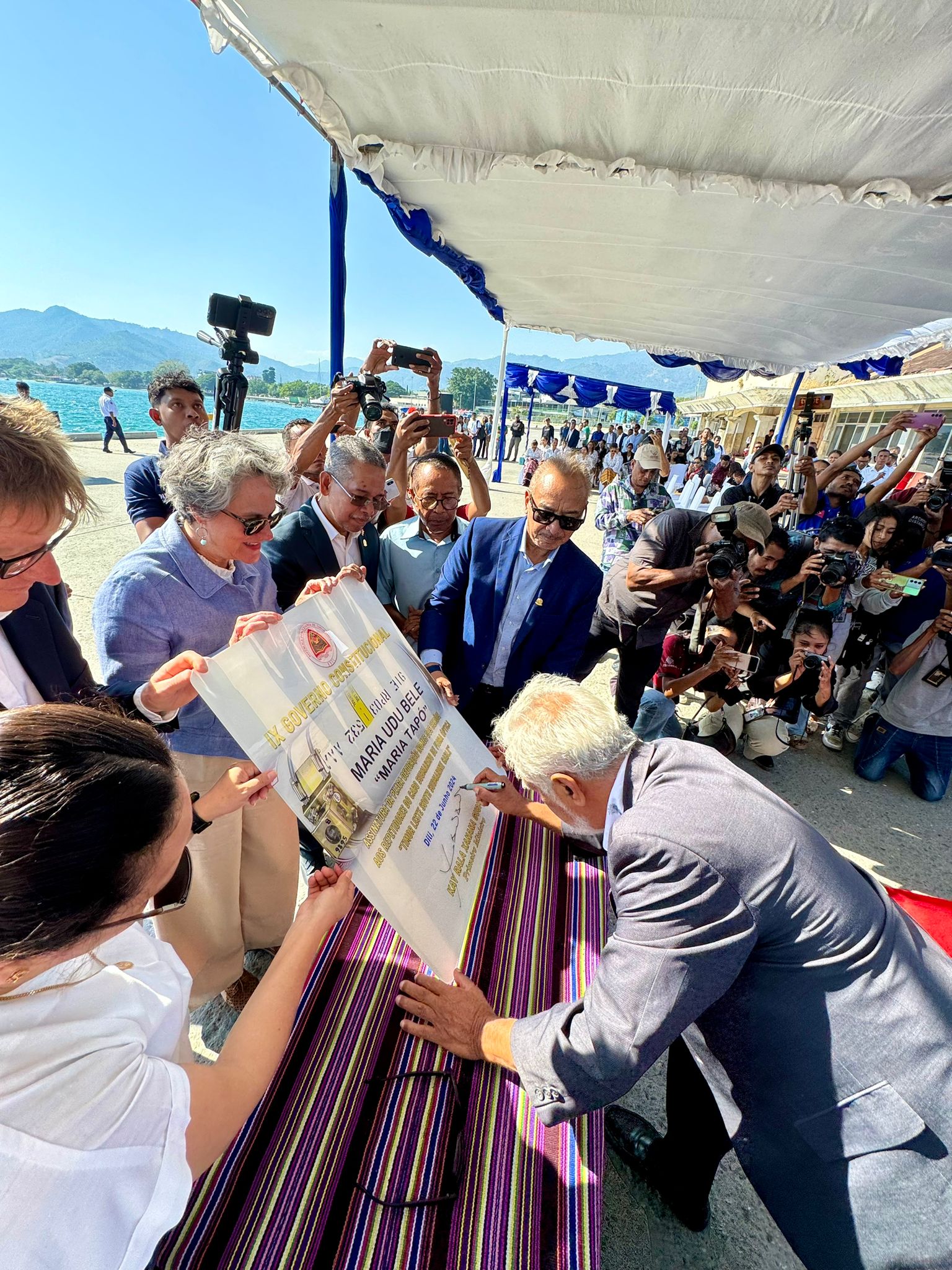
The launch of Timor-Leste South Submarine Cable marks a significant step forward in internet connectivity
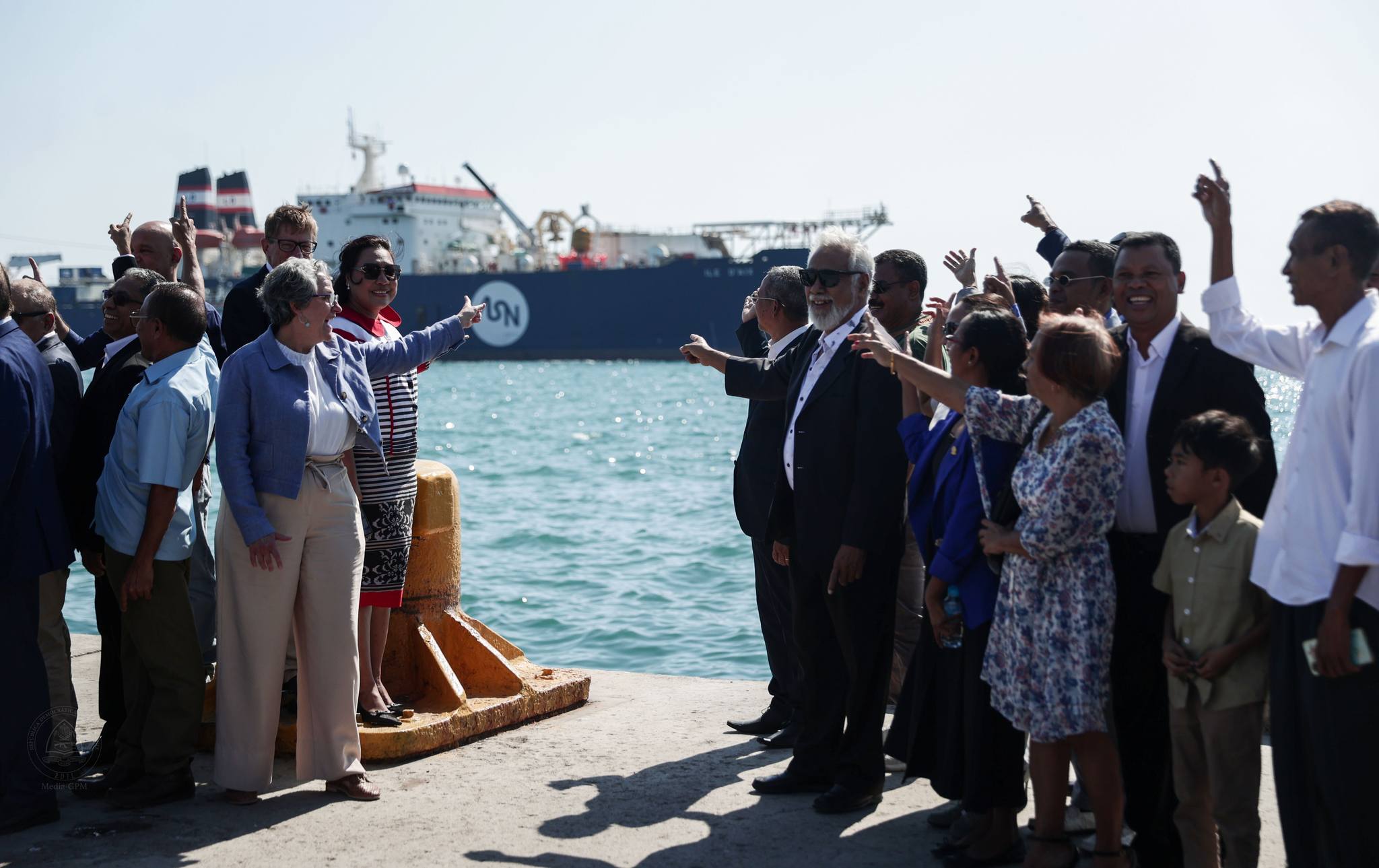
Timor-Leste has made a significant leap forward in securing its digital future with the 'Golden Buoy' presentation and the launch of the Timor-Leste South Submarine Cable in Dili.
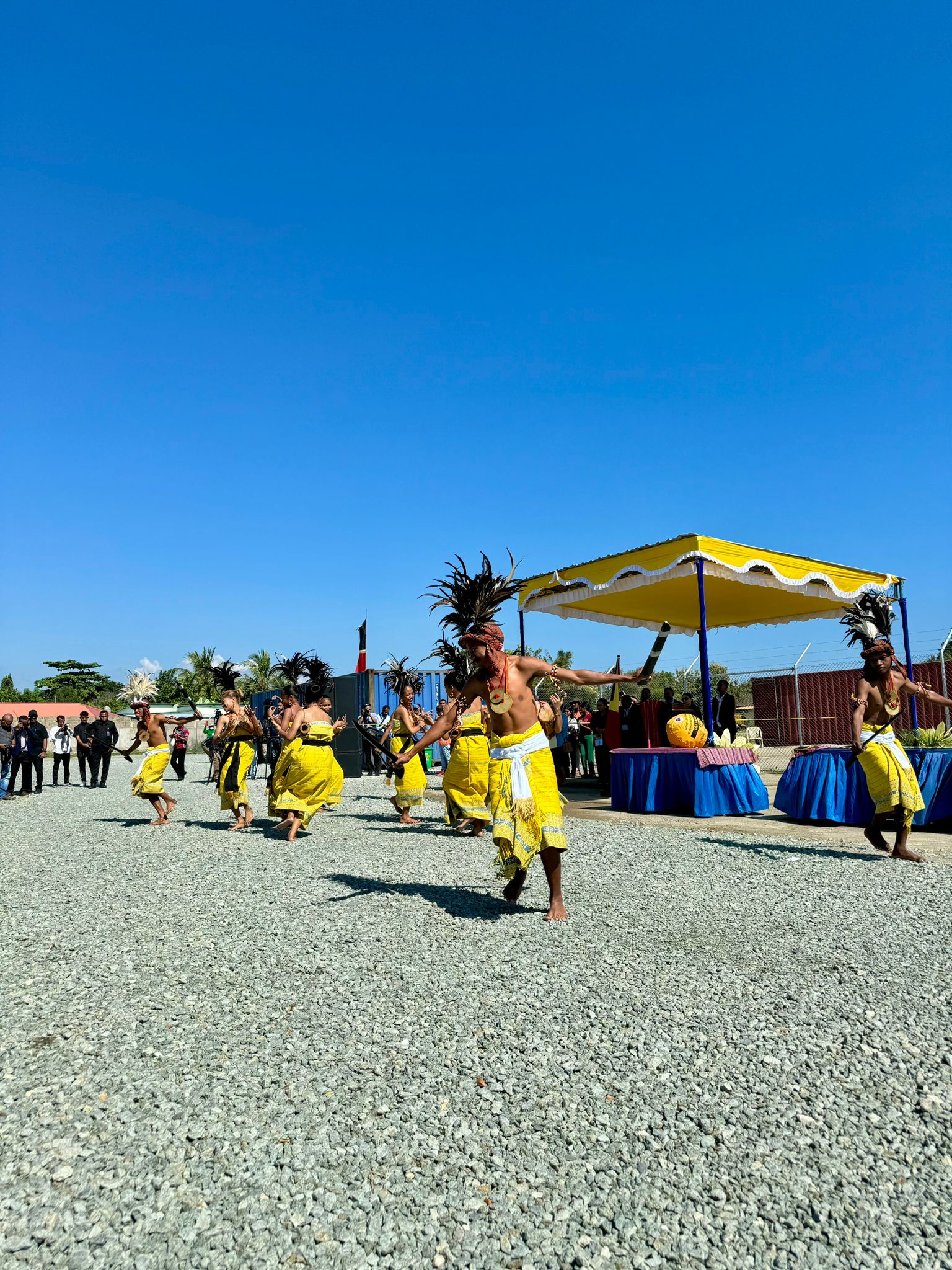
New fibre optic cable set to connect the nation to the global digital landscape, driving ICT-led growth