Inclusive, well-designed infrastructure plays a critical role in promoting gender equality, disability equity and social inclusion.
Women, people with disability and other groups experiencing disadvantage or marginalisation can be disproportionately affected by inadequate infrastructure and face barriers to participating in its design and implementation.
Quality, inclusive and accessible infrastructure generates outcomes not only for end users but across planning, design and implementation. By promoting equitable employment and training opportunities, facilitating participation in consultations and decision-making, and promoting safe and inclusive workplaces, infrastructure construction and delivery can increase economic opportunities for women, people with disabilities and other groups experiencing disadvantage or marginalisation.
Overarching principles and approach
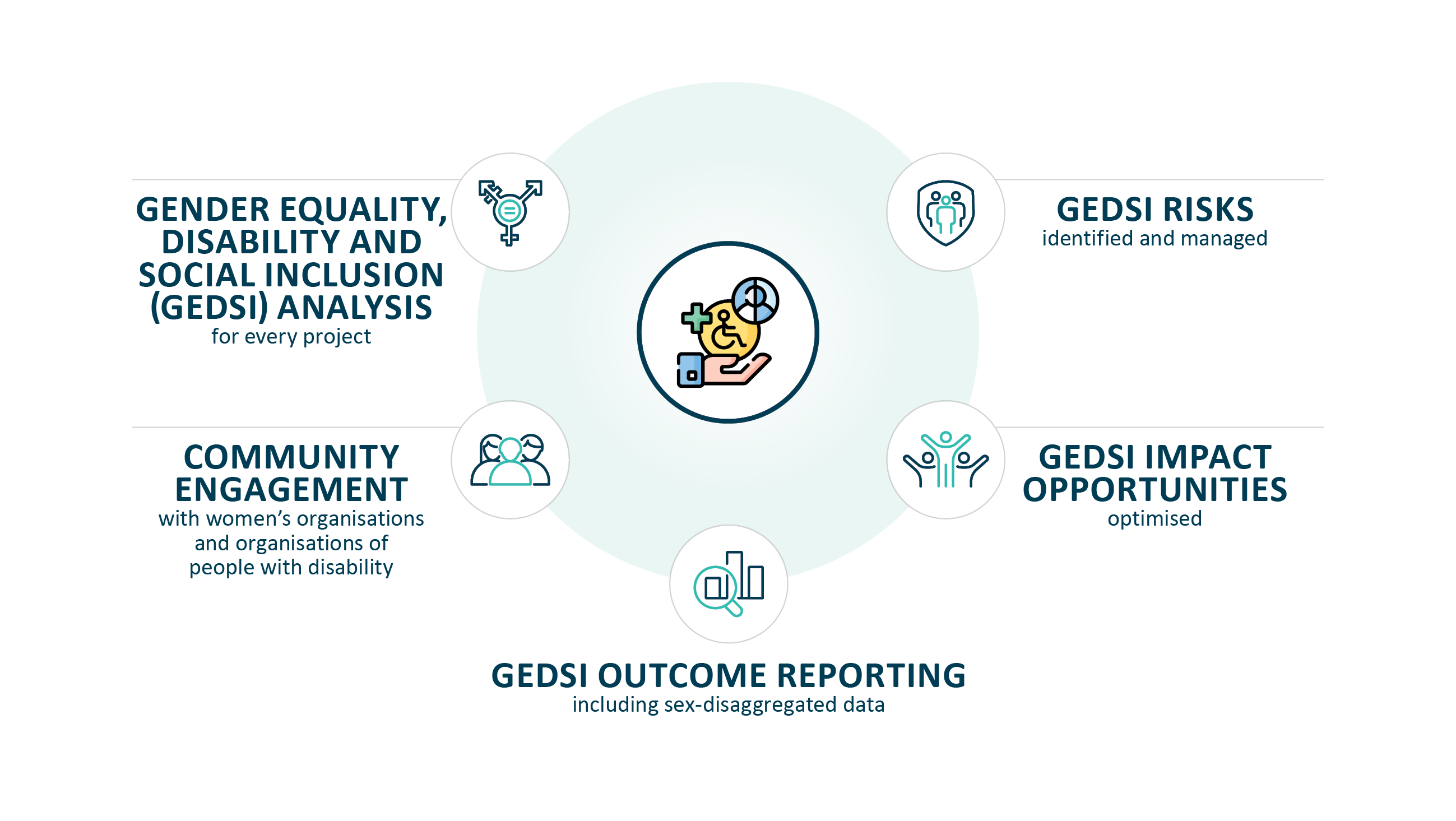
The PIF Leaders-endorsed Pacific Quality Infrastructure Principles include a clear commitment to inclusivity - “infrastructure for all, inclusively developed”. The AIFFP is delivering on these Pacific priorities by embedding gender equality, disability and social inclusion (GEDSI) across the project lifecycle so infrastructure supports inclusive and sustainable development outcomes.
The AIFFP assigns an OECD DAC gender equality and disability equity policy marker to each investment at the scoping stage to determine what will be the investment-specific proportional approach to both gender and disability.
In line with Australia's International Gender Equality Strategy (February 2025) and AIFFP safeguards policies, the AIFFP takes a twin-track approach to integrating GEDSI into our investments:
- By implementing, and requiring our partners to implement, the Do No Harm principle and safeguards to ensure women, people with disabilities and other groups experiencing disadvantage or marginalisation are not harmed or disadvantaged and gender, disability and social inequalities are not exacerbated.
- By mainstreaming GEDSI throughout the project cycle to ensure women, men, people with disabilities and other groups experiencing disadvantage or marginalisation can benefit equally, their needs and priorities are addressed, projects contribute to narrowing gender, disability and social inclusion gaps.
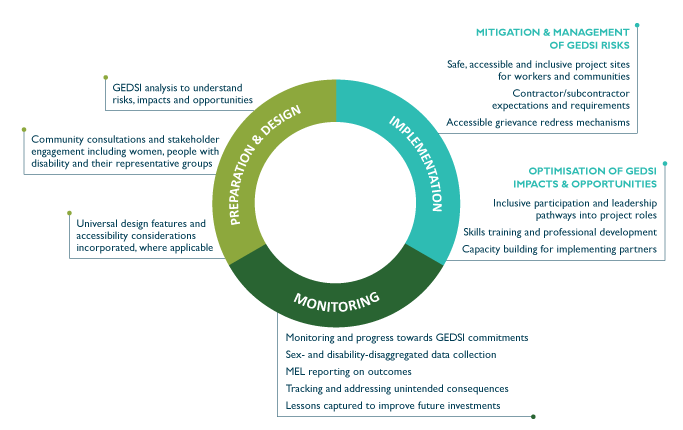
GEDSI across the project cycle
To implement our GEDSI approach we develop and implement strategies, actions and activities, tailored to each investment, across the lifecycle: