Infrastructure projects deliver stronger, more sustainable and more inclusive development outcomes when local people and businesses are meaningfully engaged in its delivery.
Local content is a clear priority of Pacific Leaders, as reflected in the PIF Leaders-endorsed Pacific Quality Infrastructure Principles, to “promote sustainable, local and inclusive economic development”. In line with this Pacific priority and supporting locally led change as a central approach of Australia’s International Development Policy, local content is a key principle underpinning the AIFFP’s approach to delivering value for money and sustainable development outcomes.
Local content in infrastructure refers to the extent to which local workforce, businesses and services are involved in planning, design and delivery of investments. This contributes to increased economic activity and ensures infrastructure is locally informed, locally delivered and responsive to the local context.
Local content approach
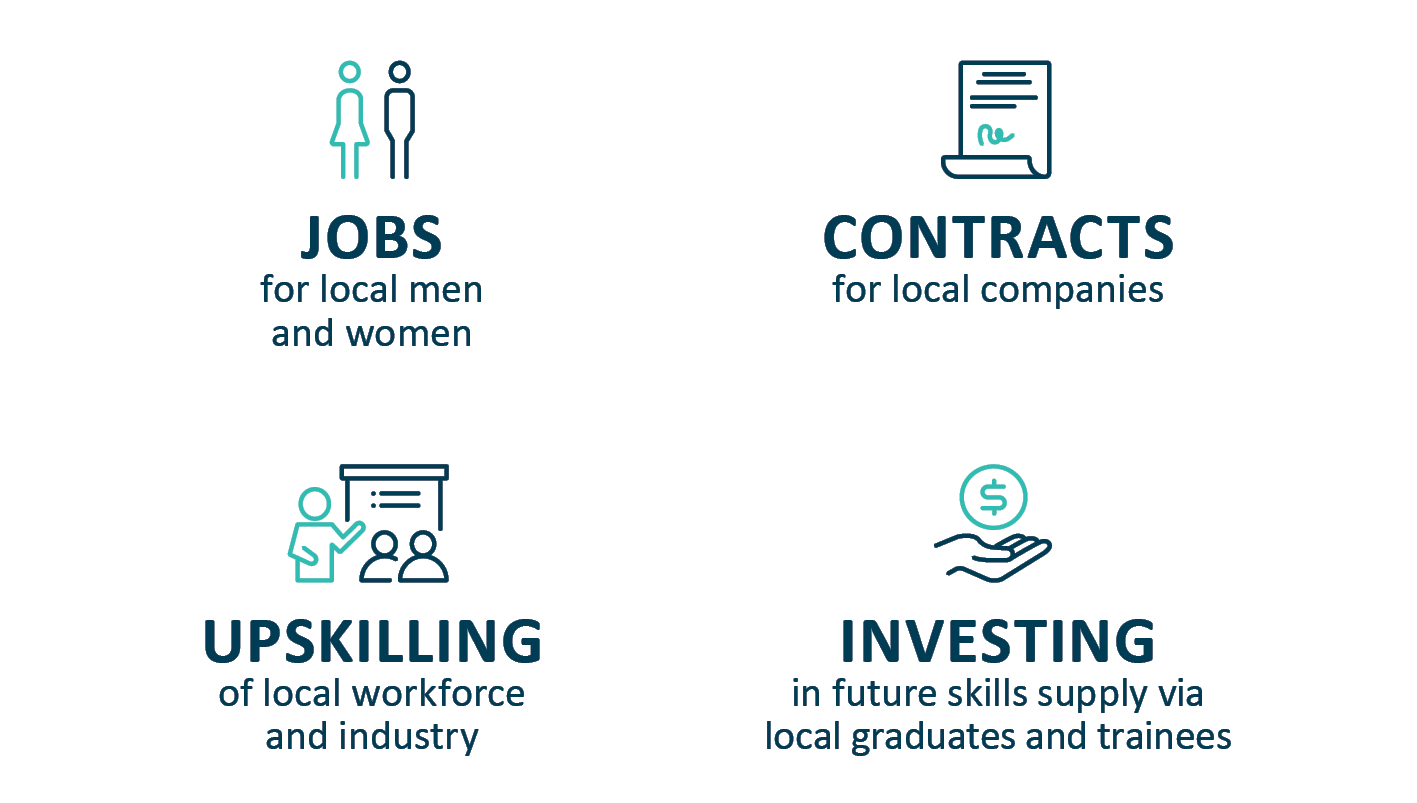
For the AIFFP, local content is an integral part of the value proposition of high-quality and sustainable critical infrastructure investments. In line with the AIFFP Social Procurement Policy, the AIFFP seeks to optimise opportunities for local employment, procurement and skills development across its portfolio - ensuring investments generate immediate economic benefits for Pacific communities while strengthening long‑term local capabilities and building a stronger pool of skilled workers and local industries to deliver future infrastructure development.
The AIFFP particularly focuses on generating inclusive jobs and business opportunities for women, young people, people living with disabilities and other groups experiencing disadvantage and marginalisation. The AIFFP builds partnerships with local, regional and international training providers and industry to deliver structured on-the job training and increase the supply of trade-qualified workers in the Pacific labour market.
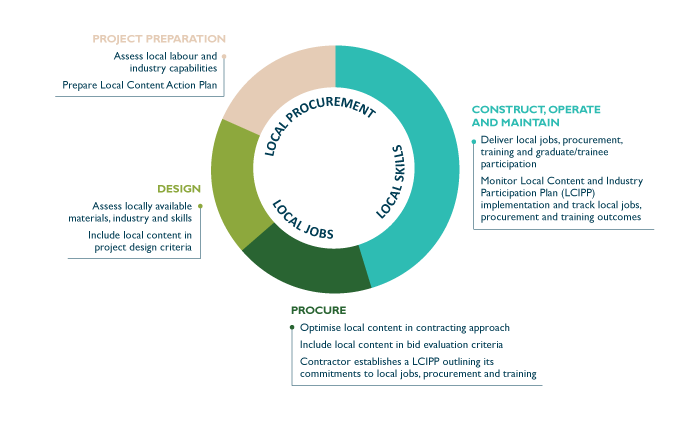
The AIFFP adopts a structured, lifecycle approach to local content, integrating requirements across all stages of the project cycle to ensure infrastructure investments deliver sustainable, long-term development outcomes for Pacific people, businesses and economies. The local content approach is tailored to each investment, reflecting sector, country context and available local industry and workforce capabilities.