Our safeguards standards
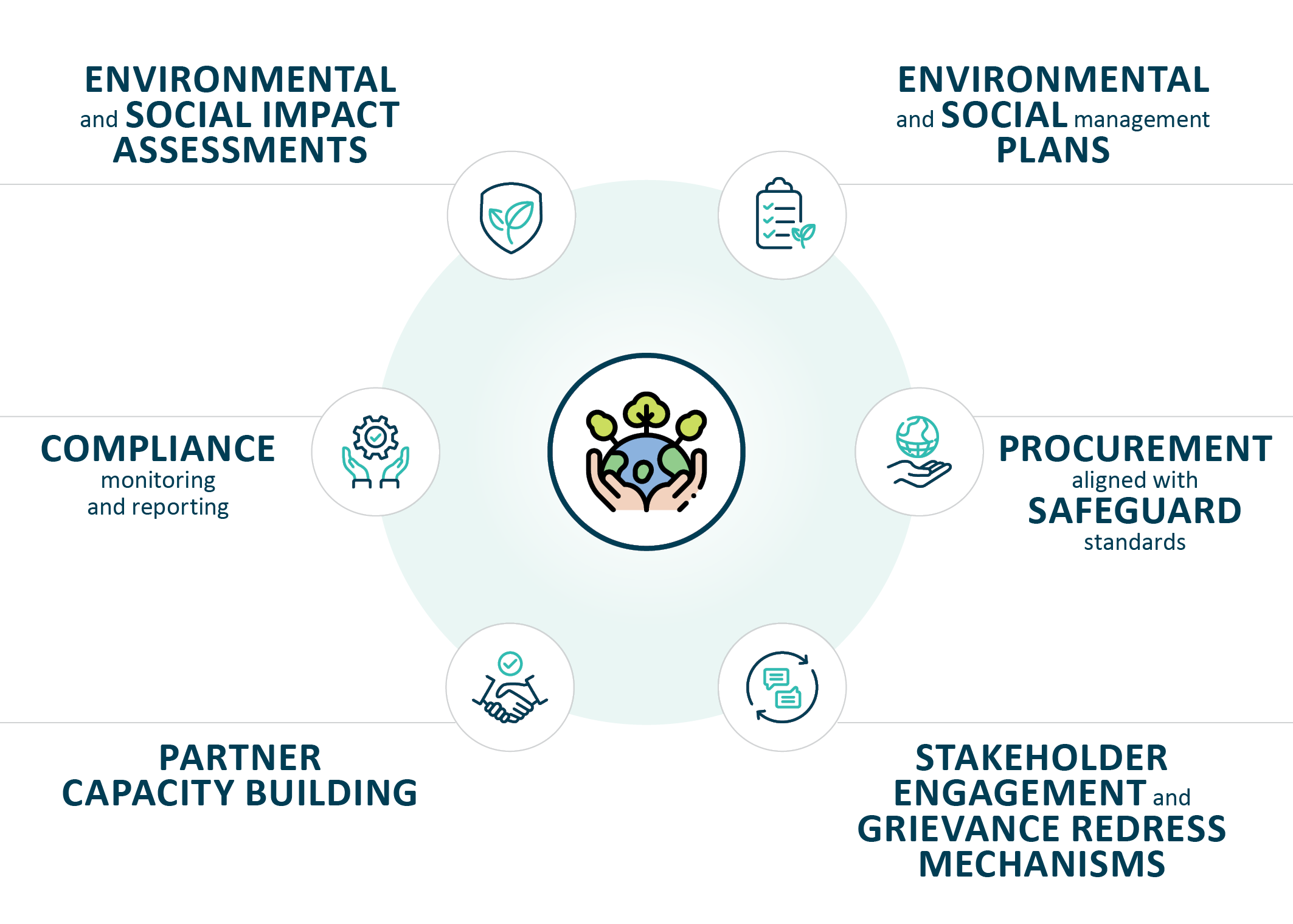
The AIFFP works with partners to identify, manage and monitor environmental and social risks across infrastructure investments. Our safeguards approach helps protect people and the environment, supports compliance with partner government requirements, and strengthens the long-term development outcomes of AIFFP-supported projects.
AIFFP investments are designed to meet high standards for environmental and social protection. Our approach applies international safeguards standards, including the Equator Principles and IFC Performance Standards on Environmental and Social Sustainability, as well as DFAT’s safeguard policies:
- Environmental and Social Safeguard Policy (2019) (ESSP)
- Child Protection Policy (2025)
- Protection from Sexual Exploitation, Abuse and Harassment Policy (2025) (PSEAH)
AIFFP safeguards processes also comply with relevant partner government environmental and social legislation.
Safeguards across the project lifecycle
Environmental and social safeguards are considered at all stages of the project lifecycle, from planning, design and procurement through to construction, operation and maintenance. AIFFP projects undergo environmental and social screening and assessment during planning and design, before approval. Consistent with DFAT’s Environmental and Social Safeguard Policy, all AIFFP investments are screened for risks against five safeguard issue areas:
- Environmental protection
- Children, people with disability, and groups experiencing disadvantage or marginalisation
- Displacement and resettlement
- Indigenous peoples
- Health and safety
Child protection and protection from sexual exploitation, abuse and harassment
The AIFFP recognises that infrastructure projects can bring positive change and opportunity to communities, including children and their families, young people, women and groups experiencing disadvantage or marginalisation. Without adequate protections, infrastructure developments can also pose serious risks of harm. Children and adults at heightened risk of harm in areas surrounding infrastructure projects may face increased risks of sexual and physical violence, abuse and exploitation. The infrastructure sector can also present heightened risks of sexual exploitation, abuse and harassment for women workers and adults experiencing vulnerability, both in workplaces and surrounding communities.
DFAT takes a zero-tolerance approach to exploitation, abuse and harm to children and adults. Direct and indirect risks to children are considered in the design and implementation of AIFFP investments. DFAT’s Child Protection and PSEAH policies apply to all DFAT officers, functions and programs, including individuals and organisations financed by the AIFFP.
AIFFP investments include safeguards in project design, management plans, contracts and oversight arrangements to help ensure partners, including managing contractors, grant recipients and downstream partners, meet these requirements.
Strong reporting and investigation procedures are essential to safeguarding and accountability. DFAT requires all partners to establish systems that enable safe, confidential and accessible reporting of both child protection and SEAH concerns, and to investigate allegations appropriately.
Managing modern slavery risks
Infrastructure projects can carry modern slavery risks, including through labour practices and project supply chains. Some sectors, products, services, geographic locations and entities present higher risks that need to be considered across the AIFFP project lifecycle. For example, supply chains for solar panels and batteries can carry elevated risks. DFAT’s ESSP requires investments to avoid the use of forced labour, including trafficked persons, slavery, servitude, debt bondage and deceptive recruiting of labour. In line with DFAT’s obligations under the Commonwealth Modern Slavery Act 2018, AIFFP investments are screened and assessed proportionately for modern slavery risks. Where risks are identified, mitigation measures may include supply chain screening, contractor safeguards, worker grievance mechanisms, mandatory reporting and investigation of allegations.
Improving environmental and social outcomes
AIFFP’s safeguards approach integrates gender equality, disability and social inclusion, climate change and disaster resilience, and local content considerations. This helps manage environmental and social risks while improving development outcomes where possible.
This can include improving accessibility, strengthening worker and community safety, supporting meaningful consultation, increasing local employment and skills opportunities, and building climate and disaster resilience into project design.
The AIFFP recognises the challenges of managing environmental and social risks in the Pacific context. Where there are gaps between safeguard standards, the AIFFP works closely with partners to ensure project safeguards are robust, draw on local knowledge and expertise, and are routinely monitored. Where needed, the AIFFP supports organisations to build their institutional capacity to meet international standards.