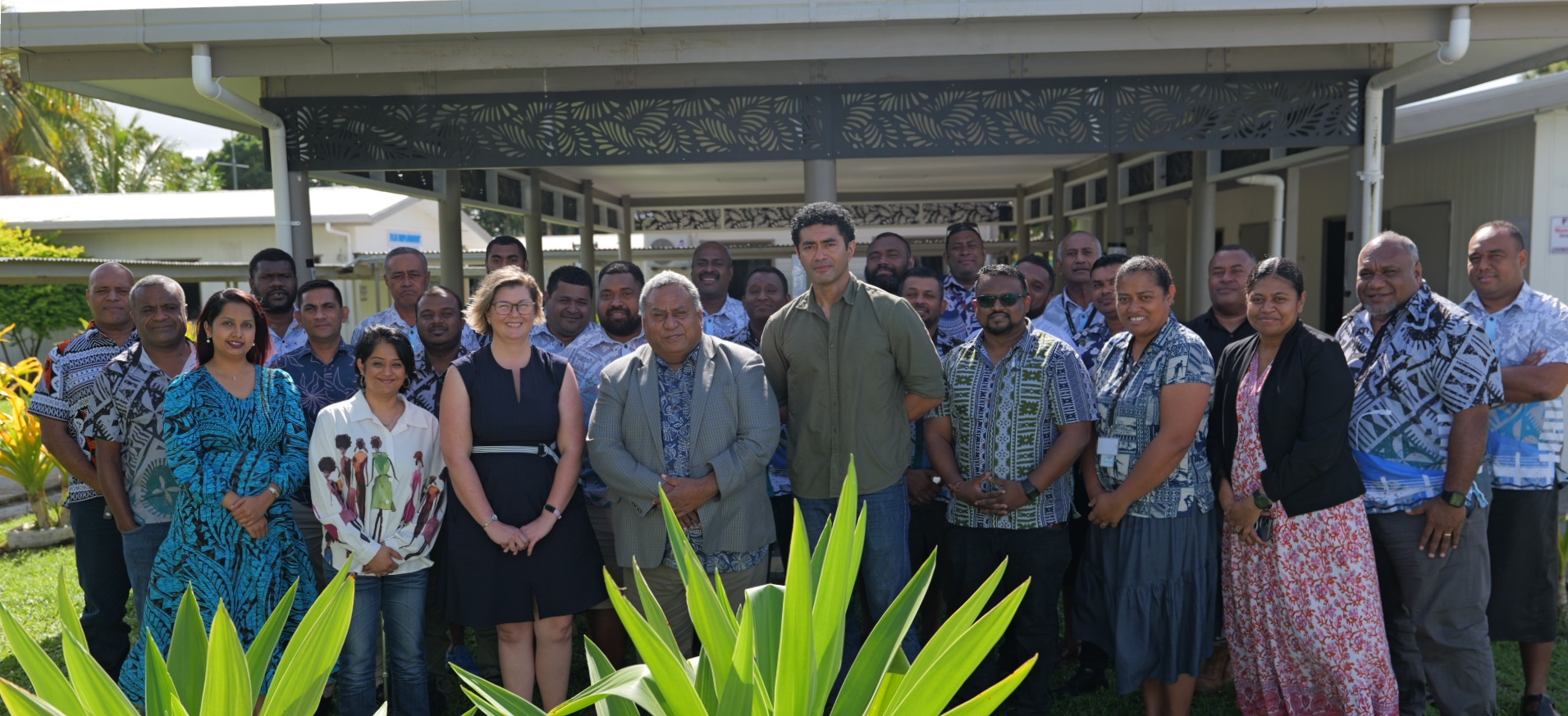
Staff from the Fiji Roads Authority (FRA) have improved their understanding of issues relating to sexual exploitation, abuse and harassment (SEAH) in the delivery of major infrastructure projects, thanks to the training provided through the Australian Infrastructure Financing Facility for the Pacific (AIFFP).
The focused training, delivered in collaboration with specialist training provider Evawtech over five days to senior leaders and board members as well as safeguards, human resources, procurement, finance, communications, technical and delivery teams, aimed to build leadership and staff capacity to better understand, protect from and respond to issues related SEAH. It covered topics including gender-based violence in road operations and engineering; SEAH expectations during procurement and of contractors; SEAH complaints handling; and inducting FRA staff and contractors on SEAH matters.
Evawtech Gender-Based Violence Specialist, Tevita Seruilumi, said the training aimed to equip staff to respond to instances of SEAH in their everyday work. “We’ve talked based on the experiences of the participants on a lot of realistic situations but also talking to them about possible responses from FRA in relation to diverse groups that FRA engages with,” he said.
The AIFFP and FRA are working together to improve roads and bridges across Viti Levu, with the Fiji Transport Infrastructure Restoration investment having upgraded more than 1.5 million square metres of road surface and eight critical bridges.
The training module forms part of the project, with the AIFFP committed to supporting partners beyond project delivery and building corporate capacity. In 2024, FRA launched its first-ever strategic plan with support from the AIFFP.
FRA Chief Executive Officer, Mr. Apisai Ketenilagi, said the training was particularly valuable for FRA’s male leaders. “It provided an opportunity for participants to differentiate between gender attributes, privileges and opportunities associated with specific genders, as well as understand the different types of gender-based violence and safeguarding measures,” he said.